
2WR
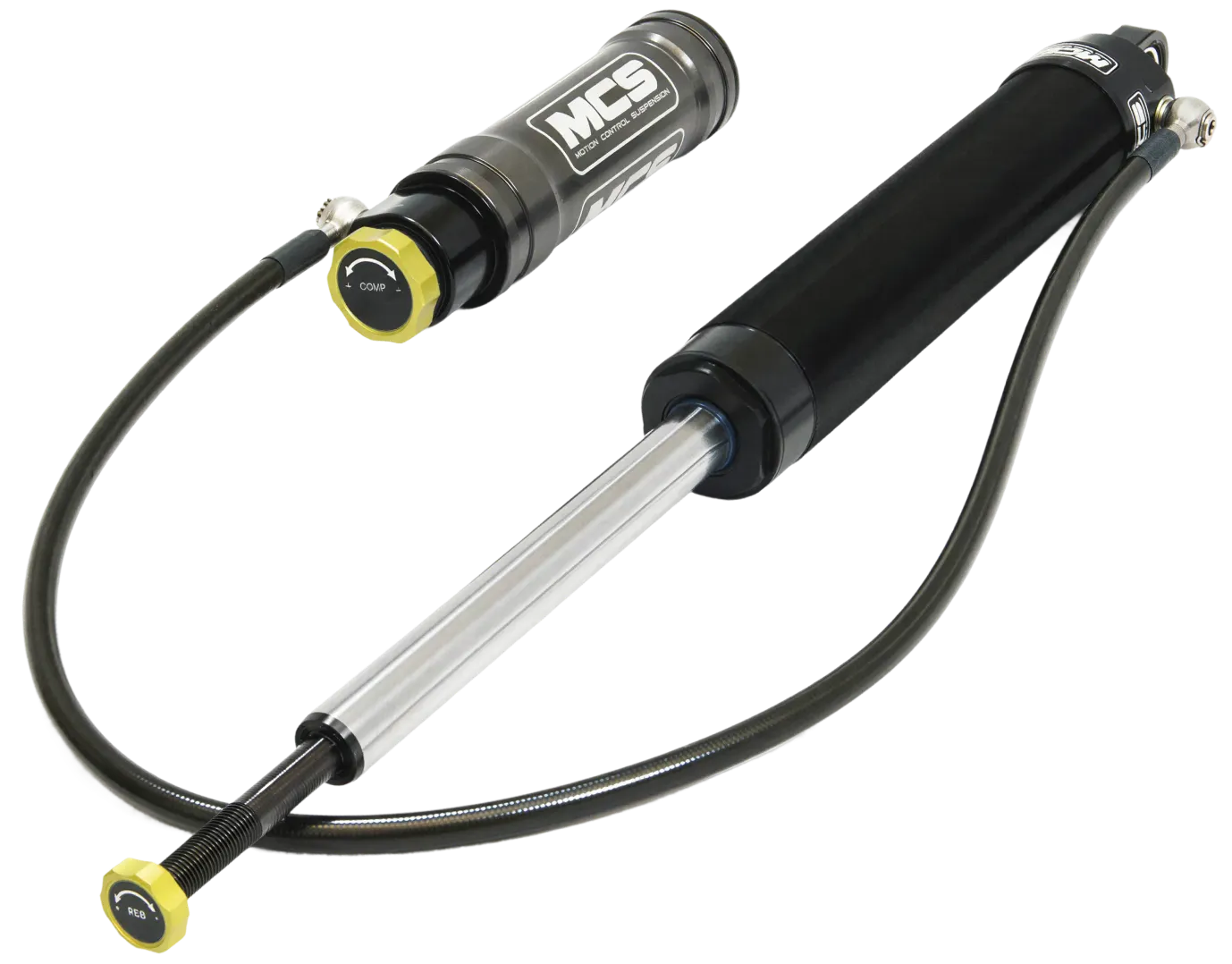
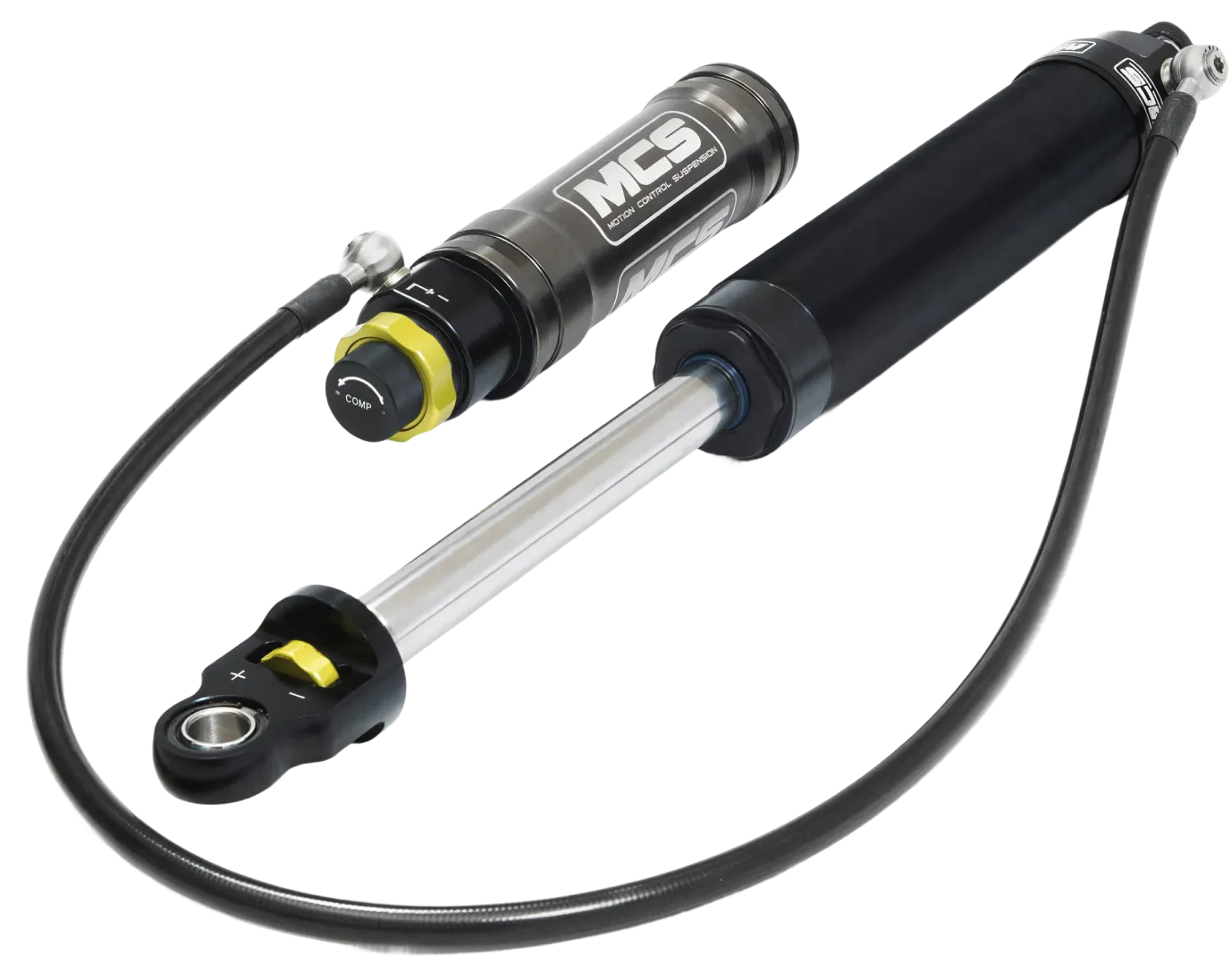
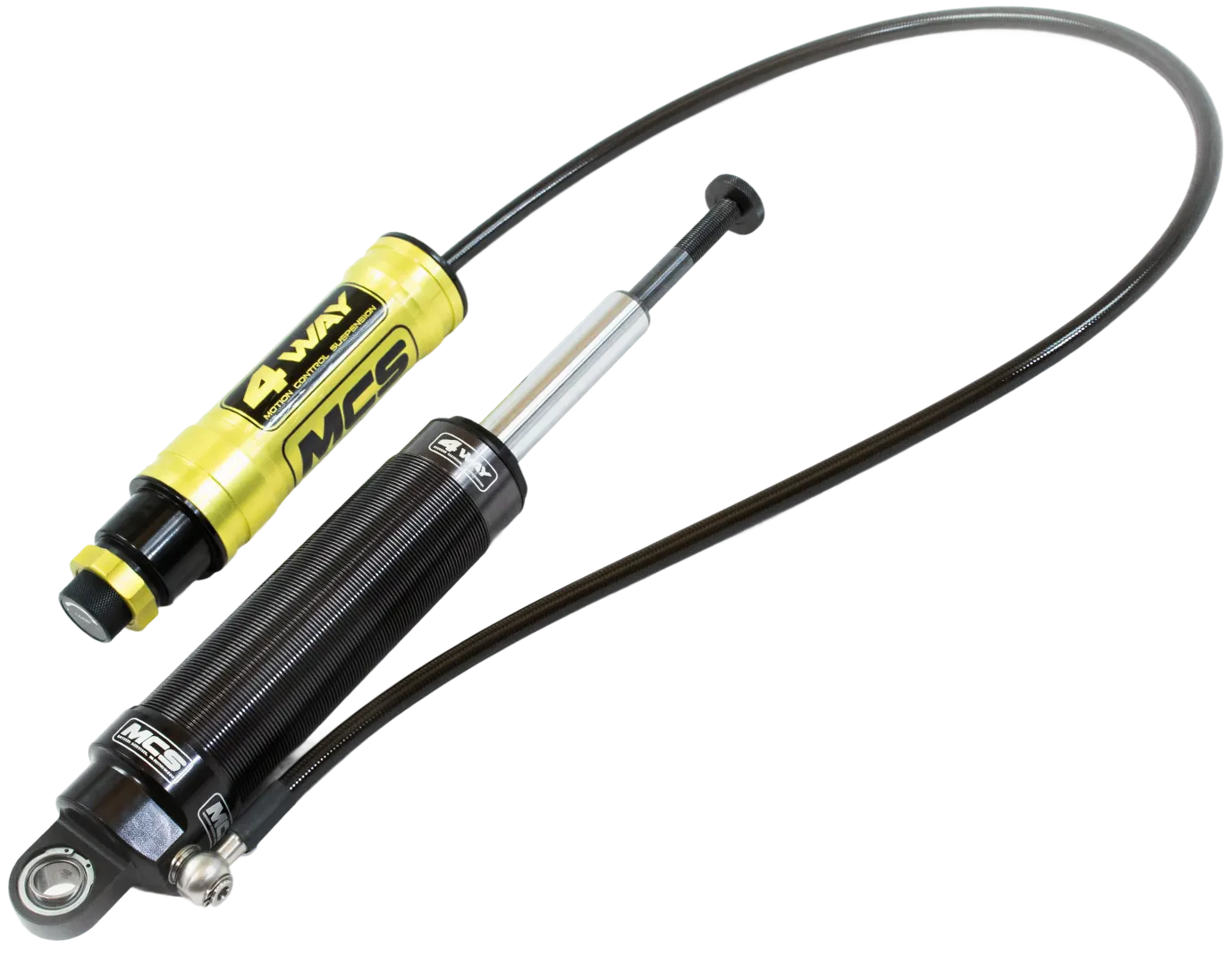
The MCS 2WR is a double adjustable remote reservoir damper designed for drivers and vehicles that demand greater consistency, control, and tuning range as performance targets rise. Independent compression and rebound adjustment is paired with an external reservoir, increasing fluid volume and thermal stability for sustained performance under higher loads.
As pace increases and duty cycles become more severe, the 2WR delivers the composure and repeatability required to keep the car predictable and responsive. Large format blow off assemblies sharpen high speed damping response while improving compliance over curbing and surface irregularities, allowing the car to maintain grip without sacrificing control.
Adjustable nitrogen pressure adds an additional layer of tuning flexibility, enabling the damper to be tailored to vehicle weight, tire choice, and track conditions as setups evolve. The 2WR is a long term solution that grows with the car and driver, bridging the gap between non remote systems and more advanced multi way remote reservoir dampers.
Technical Features
The MCS 2WR uses a remote reservoir architecture to separate damping control from fluid volume and gas charge management. This increases oil capacity and thermal stability for consistent performance under load, while keeping compression and rebound circuits fully independent.
Compression adjustment provides 18 clicks of control for platform support and impact management. Rebound adjustment provides 18 clicks to tune spring control, corner exit stability, and overall chassis balance. Large format blow off assemblies at the piston deliver precise damping behavior across the full range, and adjustable nitrogen pressure in the reservoir adds another layer of tuning flexibility as the car, setup, and driver progress.
18 Clicks of Compression Adjustment
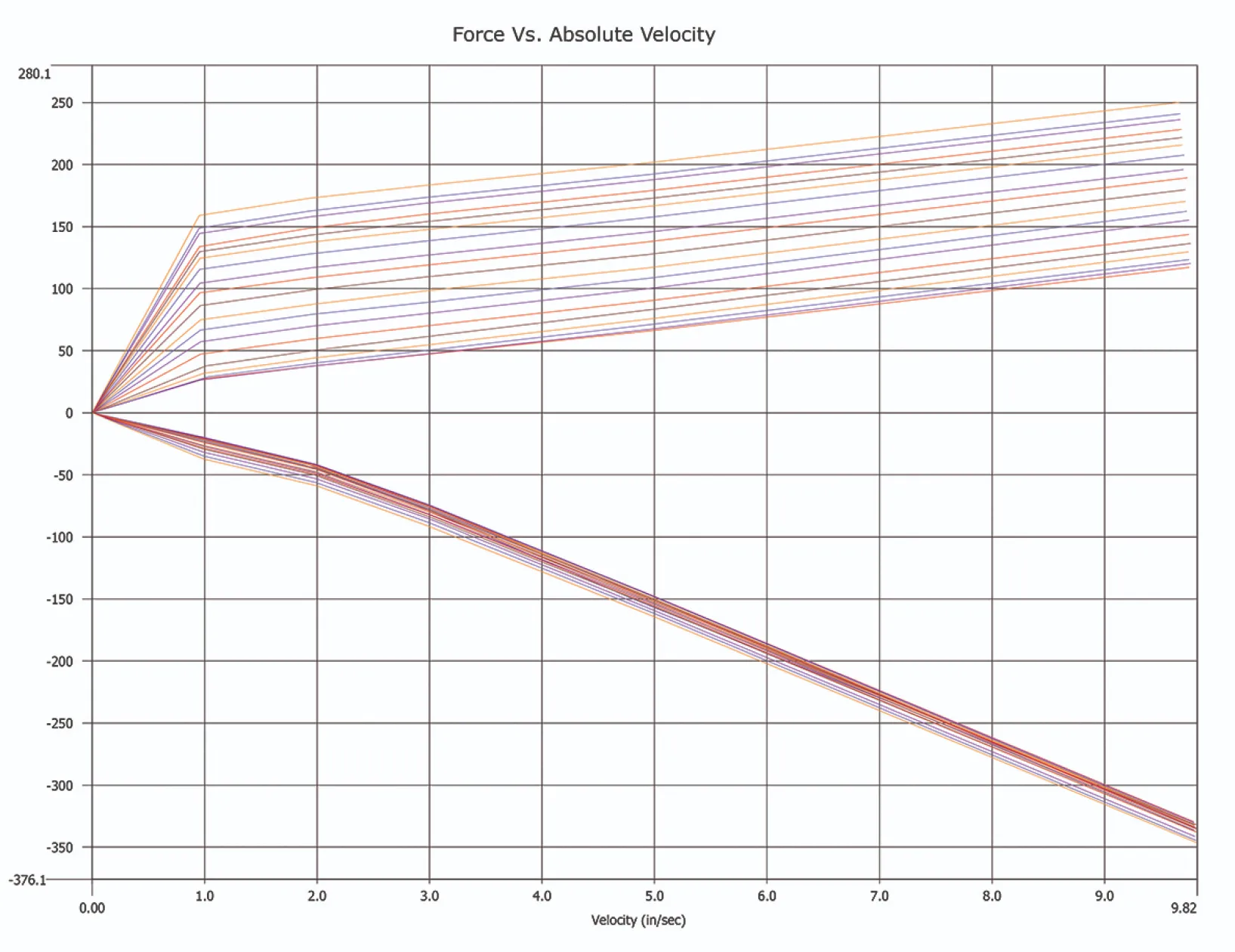
Compression adjustment allows the driver to progressively add platform support, improving use of the tire’s mechanical contact patch as grip and speed increase. This results in better control under braking, improved mid corner stability, and more consistent lap times.
Compression damping forces are managed by a large blow off valve located directly on the reservoir head. This approach delivers precise, repeatable control across the full adjustment range and avoids the narrow effective window common to needle valve systems, where changes quickly lose influence as flow increases.
18 Clicks of Rebound Adjustment
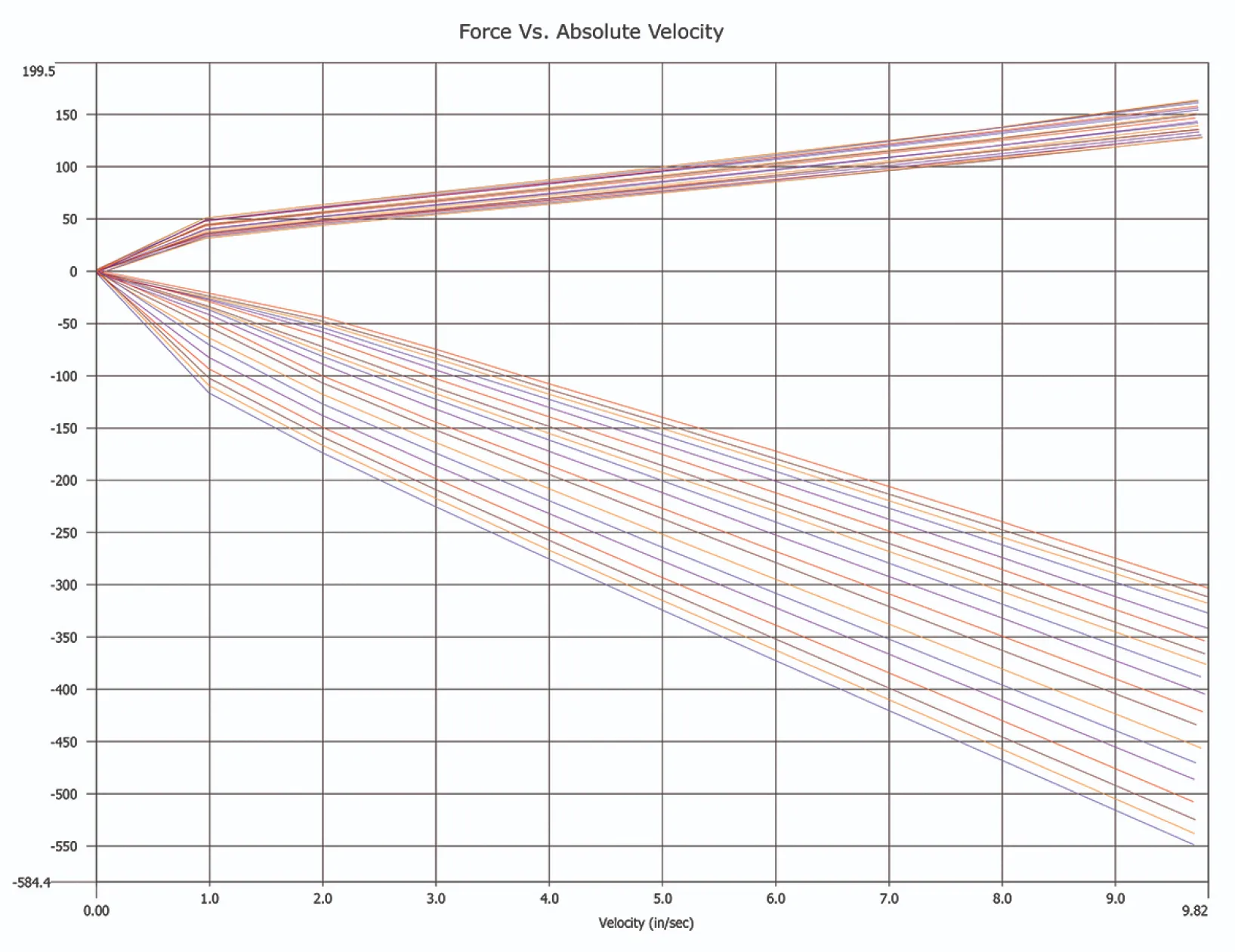
Rebound adjustment allows the driver to progressively increase spring control and fine tune overall chassis balance as grip, speed, and commitment rise. Proper rebound control improves how the car settles after inputs, maintains tire contact through transitions, and delivers consistent behavior corner to corner.
Rebound damping forces are regulated through precisely sized orifices at the main piston assembly within the damper body. This hydraulic architecture provides a wide, usable operating range with consistent response per click, reduces the need for frequent revalving, and maintains repeatable damping performance over extended use without degradation.
Gas Pressure Adjustment
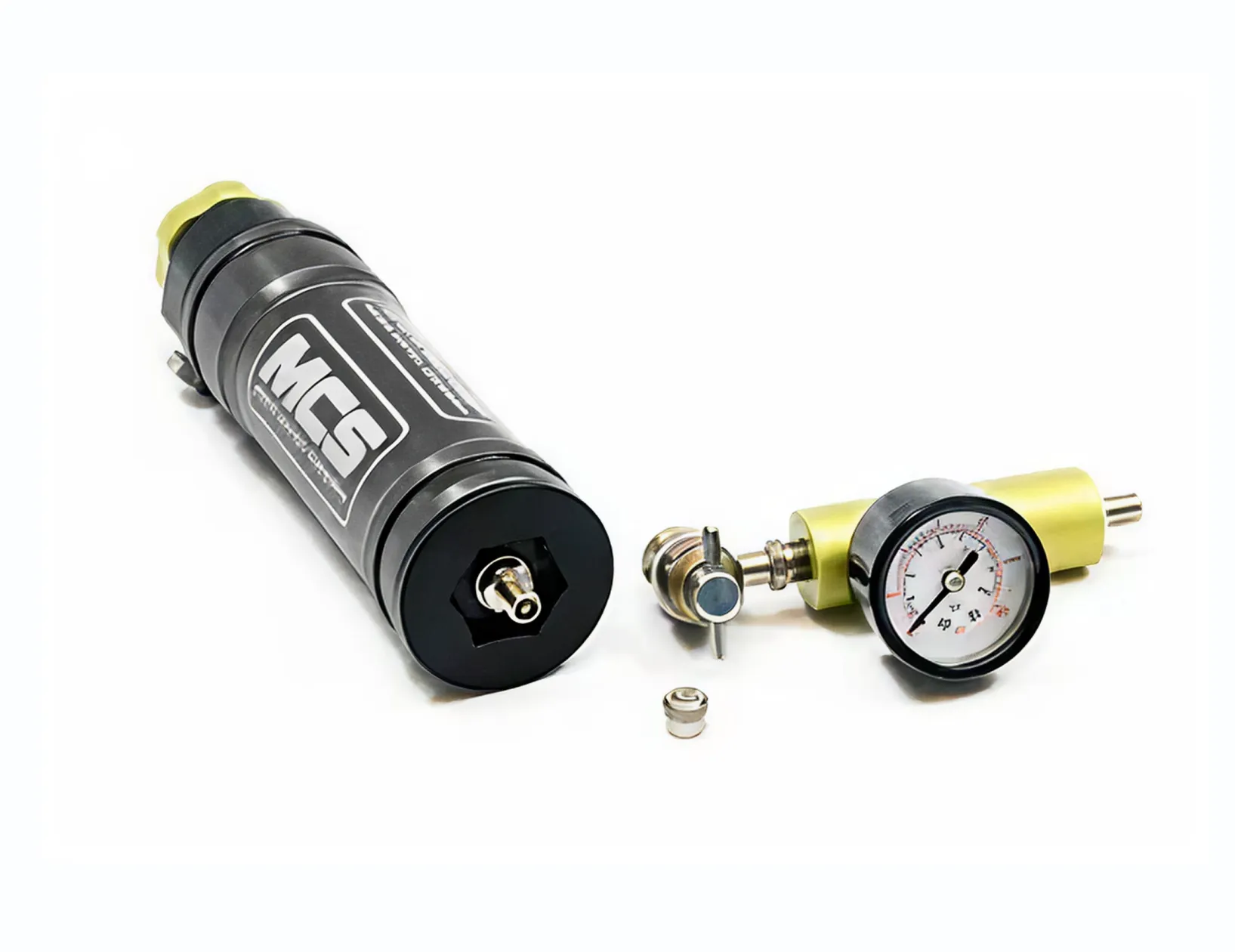
Each remote reservoir is equipped with a Schrader valve, allowing direct adjustment of the nitrogen gas pressure. This adds a powerful tuning tool that lets the driver increase or decrease overall damper support without changing valving.
Reservoir pressure is adjustable from 100 to 275 PSI, providing flexibility to support higher cornering loads in high grip conditions or to allow increased weight transfer when maximizing traction on lower grip surfaces. This adjustment expands the usable operating window and allows the damper to be tuned as vehicle demands and driving style evolve.

<0.5%
Thousands of systems in service worldwide with less than a half percent reported failure rate. Built for reliability first, because confidence starts with consistency.
3.5x
Up to 3.5 times the service life of typical aftermarket coilover systems, delivering more miles, more track time, and fewer rebuild cycles.
0.3 sec
Per corner, per lap. Typical gain versus competing motorsport damper systems, measured in corner segments. Bigger gains when upgrading from entry level aftermarket suspension.
Technical Specifications
These specifications highlight the internal architecture, adjustment mechanisms, and core components that define damper performance, durability, and tuning range.
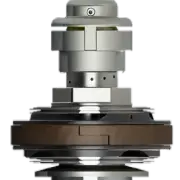
Precisely Sized and Matched Orifices Regulate Oil Flow for Predictable Damping and a Broad, Usable Adjustment Range

Shaft Guide Provides Lateral Support at the Upper End of the Damper Body
Support Piston Provides Lateral Support at the Piston End of the Shaft Assembly

Shaft-End 18-Position Rebound Adjustment with Positive Mechanical Detents

44 mm large-diameter main piston with linear-to-progressive force curve

Precision CNC-Machined Components with Lot Control and Serialization
Schrader valve allows precise gas pressure adjustment to increase or decrease overall support.
Oversized blow-off valves engineered to deliver consistent damping control under high shaft speeds and extreme thermal loads.
Swivel hose fittings designed to eliminate hose binding, reduce leak risk, and simplify installation.
Large reservoir increases oil and gas volume, stabilizing internal pressure and reducing pressure rise through the stroke.
Explore Other Products

Let’s Talk Solutions
See what makes Motion Control Suspension different. Whether you want to visit our facility, learn more about our process, or discuss a custom solution for your project, our team is here to listen and help.